 Menu
Menu


Thaler v. Perlmutter
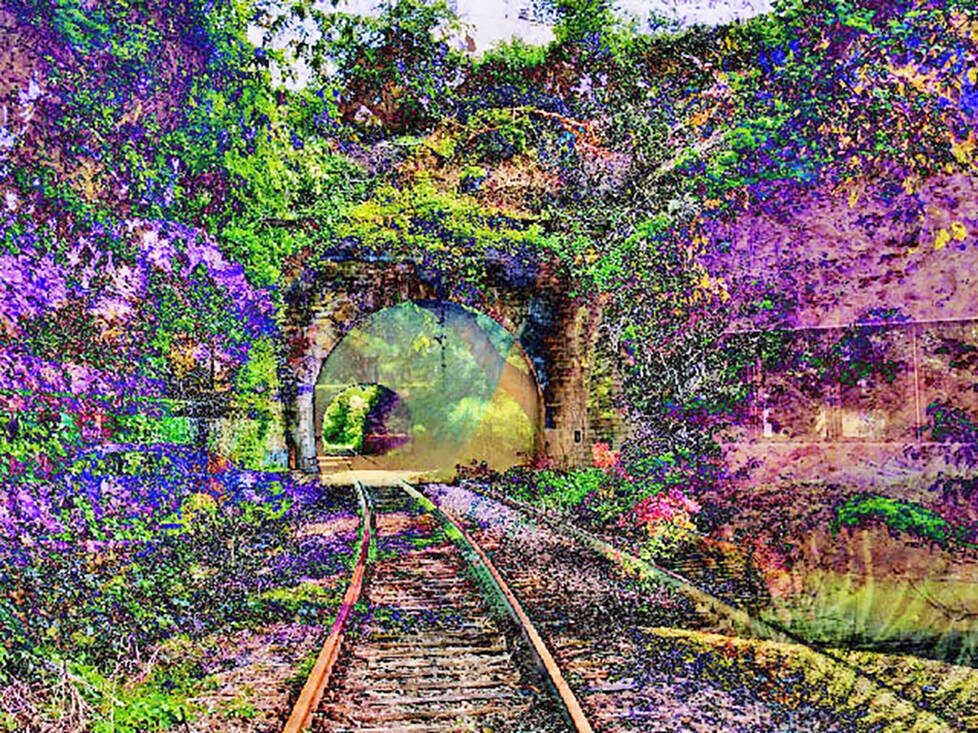
On Wednesday, an old friend stopped into my office, and noting a recent news account, he was concerned that Artificial Intelligence could be granted a copyright and inch one step closer to personhood.
After a bit of homework, my best answer was, “Not exactly.”
The case he was likely referring to was Thaler v. Perlmutter, a lawsuit that has become one of the most important legal tests yet of how American law will treat artificial intelligence.
At first glance, the headlines surrounding Thayler could raise those concerns. At the center of the case was the claim that a digital image titled “A Recent Entrance to Paradise.”
Its creator, computer scientist Stephen Thaler, maintained that the work was generated entirely by his AI system, “Creativity Machine,” with no human creative input. His argument was straightforward: if a machine creates a work, the owner of that machine should be able to claim the copyright.
In that sense, it would differ from my buddy’s concerns. It would be the machine’s owner who received the copyright, not the machine itself–so no steps would be taken toward AI’s personhood, or for that matter, the robot apocalypse.
So far, Federal courts have rejected Thaler’s argument at every level. The U.S. Copyright Office, a department within the Library of Congress, first refused registration by Shira Perlmutter, who served as the Director of the U.S. Copyright Office. The courts upheld that decision, and the U.S. Supreme Court declined to intervene earlier this year. The reasoning was equally straightforward. The purpose of copyright is to protect human creativity. A machine cannot (yet) be an author because, under American law, authorship requires a human.
That conclusion should ease any concerns that artificial intelligence is edging toward legal personhood. Rather than extending new rights to machines, the courts have reaffirmed a fundamental principle of copyright law: creativity originates with human beings, and the rights associated with it do as well.
What makes the case important is not what the courts rejected, but what they recognized.
The judges did not declare AI unusable. They did not suggest that works involving artificial intelligence are automatically ineligible for copyright protection. Instead, they drew a distinction that is likely to guide courts, publishers and seventh-grade composition teachers for years to come.
The decisions give legitimacy to the role of artificial intelligence as a tool. We all accept that photographers use cameras and musicians use cellos. It stands to reason that graphic designers should be able to use Photoshop and, if needed, AI. When the final work reflects human creativity, copyright protection applies because the authorship remains human.
The problem arises when the machine does all the creative work, and the human merely presses a button. Under those circumstances, the copyright is not recognized.
For publishers, artists, musicians and writers, the practical lesson is clear. The law is not asking whether artificial intelligence is becoming a person. The law is asking whether a person remains responsible for the creative choices behind a work.
For now, the answer remains yes.