 Menu
Menu


Murman pitches expanded sales tax
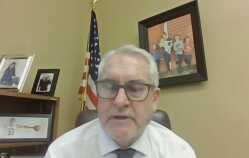
McCOOK, Neb. - During his biweekly legislative call on Thursday, Sen. Dave Murman outlined his views on property tax reform and the Legislature’s broader movement toward a consumption-based tax system, before fielding questions from participants.
Murman opened by arguing that property taxes in Nebraska were “the taxes in Nebraska that are farthest out of line,” and said the Legislature was exploring ways to shift revenue away from property taxes and toward a broader-based sales tax. He noted that the state budget was expected to reach the floor within about a week, after which debate would consume much of the session, leaving limited time to address priority bills. He explained the process for designating legislative priorities and concluded by inviting questions and suggestions from those on the call.
Across the U.S., several states are considering or moving toward expanding their sales tax bases to capture services and other transactions that have historically been exempt. In the past few years, several states have enacted legislation or adopted practices to broaden indirect tax bases to include non-traditional or digital transactions, and analysts expect at least a couple more states to continue expanding such tax bases in 2026. Additionally, proposals in other states have been reported that would repeal property taxes entirely and expand the sales tax base to include services. In other cases, states facing budget pressures or pursuing structural tax reform have considered replacing income or property taxes with broader consumption-based tax systems.
The shifts reflect, at a minimum, a policy conversation underway in several state capitals about how to modernize tax systems amid changing economies and revenue needs.
Fiscal conservatives argue that heavy reliance on property taxes — particularly to fund public services such as schools — creates economic distortions and discourages growth. High property taxes are often cited as a deterrent to in-state investment, and economic analysts say they also make states less attractive to retirees who prefer tax environments that do not erode fixed incomes through property levies. The approach under consideration is to broaden the sales tax base to reduce property tax burdens, with the expectation that consumption taxes can raise revenue from residents and visitors while easing the escalating annual pressure on long-term real estate owners.
Critics on the left generally caution that consumption-based taxes — including expanded sales taxes — can be regressive, meaning that they take up a larger share of income from lower-income households than from wealthier ones. Because lower-income households tend to spend a higher proportion of their income on consumption, they often bear a relatively greater burden under flat tax rates applied at the point of sale. Even if changes are limited to non-essentials, opponents argue that those exemptions do not fully address the inherent distributional impact, since lower-income families may still spend heavily in categories subject to the tax and bear the tax on a larger share of their income.
Retired educator and City Council Member Gene Weedin asked about the bill heard the previous day that would expand the sales tax to additional services, asking, “Don’t you have a bill right now to expand the sales tax on different services. Is this correct?” Murman confirmed the bill as LB1244 and explained that it would “eliminate, I think about 40 sales tax exemptions, or add sales tax to about 40 different goods and services,” while also eliminating exemptions on several others.
Murman framed the proposal as part of a national trend away from property and income taxes and toward sales taxes, emphasizing that he did not want the bill to advance unless it was paired with meaningful property tax relief. “Without a reduction in property tax, this is just an increase in taxes,” he said. He described sales taxes as fairer than property taxes, which he said could “tax you right out of your home or your business or your farm,” and argued that the goods and services affected by the bill were “either luxuries or at least non-essentials,” giving consumers a choice in whether to incur the tax.
Sharon Bohling challenged that premise, asking, “If people choose not to pay that tax, where are you going to get the money that we need to run the government?” Murman responded that sales taxes captured revenue from out-of-state travelers and said most consumers would still purchase the taxed goods or services, noting the state sales tax rate of five and a half percent.
Weedin pressed Murman to explain how property tax reductions would be implemented, asking whether additional funds would be allocated to reimburse property owners. Murman said he would ideally like increased revenue to flow into the property tax credit fund, but acknowledged that much of it would likely be needed in the general fund to balance the budget. He described the constitutional requirement for a balanced budget as a restraint on spending and said he anticipated a large, end-of-session package that would include a balanced budget, some property tax relief and tighter caps on local government spending.
When asked what kind of caps he envisioned, Murman said all local units of government would be affected, but singled out education as an area where caps could be tightened. He said schools had “found a way to get around some of the caps,” and while he was less familiar with other political subdivisions, he believed there was interest in tightening limits across the board.
Weedin also asked about a proposal to cap annual increases in property valuations at two to three percent. Murman said he opposed that approach, arguing that property should continue to be valued at fair market value as required by the Constitution. He emphasized that valuations reflected value, while levies determined how much tax was actually paid, and said controlling levies was the more appropriate tool. He also referenced “pink postcard hearings” and legislation intended to move them earlier to provide greater public input into local spending decisions, adding that while he did not believe governments had been irresponsible, spending became easier when funds were readily available.