 Menu
Menu


City steps in to tackle hospital cleanup
Mike O’Dell
McCook Gazette
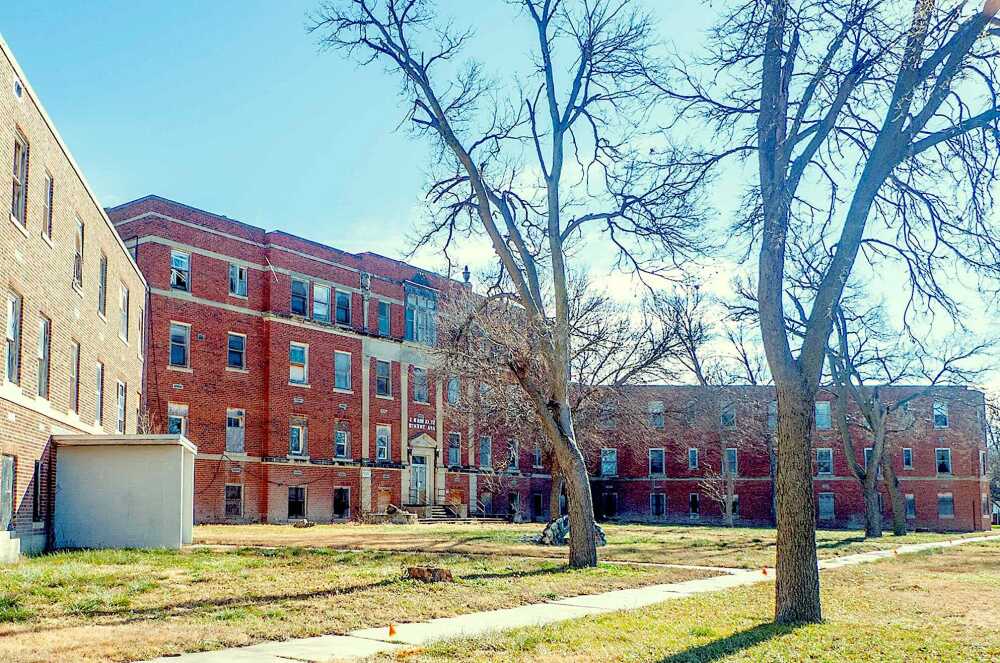
After 15 years of trial and error by a series of private owners, the City of McCook is taking steps toward mitigating one of the community’s more vexing problems. To move toward a workable long-term solution, the city must first address the environmental conditions that have prevented the property from being safely reused. Environmental assessments of the former St. Catherine’s Hospital buildings identified widespread asbestos-containing materials and lead-based paint, both of which would require abatement before renovation or occupancy could proceed.
The cost and regulatory requirements associated with that mitigation proved to be a significant barrier to redevelopment, contributing to repeated ownership changes and stalled efforts to reuse the property.
Asbestos was once a common component in building construction, widely used for insulation, fireproofing and durability before its serious health risks were fully understood. Lead-based paint was similarly common in residential and commercial construction for its durability and moisture resistance, with significant health risks – particularly to children – not fully recognized until later.
The city, under the auspices of the McCook Community Development Agency (CDA), with a nonrecourse loan from the McCook Economic Development Corporation (MEDC), has taken ownership of the St. Catherine’s Hospital properties. The properties are located at 1200 and 1201 West 4th Street and 1207 West 5th Street.
Public ownership of the former hospital property is a necessary early step in the process. It allows the city, acting as the Community Development Agency, to apply for participation in the EPA Brownfield - or more correctly, Brownfields Program.
The Brownfields program is a federal initiative designed to help communities assess, clean up and redevelop properties where redevelopment is complicated by the presence or potential presence of hazardous substances, pollutants or contaminants. Through grants, technical assistance and partnerships with state and local governments, the program reduces environmental risk, encourages reinvestment in underused or abandoned sites and supports economic development.
On Wednesday evening, a public engagement meeting was held at the McCook Municipal Center City Council Chambers. Public engagement is a required component of the Brownfields program. The EPA expects applicants and grant recipients to provide meaningful opportunities for community input before and during assessment or cleanup activities, document how community concerns are considered and keep residents informed of progress and findings.
Following introductions, a brief presentation was provided. City officials said the purpose of pursuing the Brownfields grant is to determine the scope and cost of environmental remediation needed to make the former hospital site viable for reuse, including potential housing development. No final redevelopment plan has been approved, but the assessment process is intended to clarify what future uses are feasible once environmental conditions are addressed.
City Manager Nate Schneider described some of the creatively layered ownership and funding arrangements used to move the project forward.
“The Community Development Agency purchased it (the property) through a grant that was provided by the McCook Economic Development Corporation.”
Schneider continued, “The grant money comes from the rural workforce housing fund that the State of Nebraska has set up.”
“The purchase price for the property was $200,000 plus there’s another $20,000 for administration” he added. “In total, there were $220,000 of rural workforce housing funds that were utilized.”
Director of Housing Development Amanda Engell said, “We are looking to apply for a $500,000 grant through the Environmental Protection Agency. Of that, the MEDC is also willing to support with a match commitment of $100,000, and then the Nebraska Department of Water, Energy and Environment (DWEE) is willing to commit $20,000 to help with the project as well.”
After a detailed discussion of the funding and ownership mechanisms, the meeting was then opened to public comment. Participants in the lightly attended meeting raised no overt objections to the project but asked questions about the open bidding process and the potential impacts of a completed project on the overall housing market.
For clarity, City officials described the environmental cleanup as an early step in what is expected to be a longer process, with future outcomes dependent on what is learned as the work moves forward.
Addressing asbestos and lead-based paint is required before any renovation or demolition could occur, making abatement a necessary starting point regardless of whether the property is ultimately redeveloped or demolished.
It is only after that work is completed that the city will be positioned to fully evaluate redevelopment options for the site.
While the mechanisms necessary to drive the deal forward are complex, Schneider summed up the tenor of the issue succinctly when he said, “My preference is to have private people take care of private problems, but obviously there are times when the problem is too big for a private individual to handle, and that’s what we’ve experienced.”
The grant application is due on Jan. 28, 2026.