 Menu
Menu


'After Visiting Friends' explores early death of McCook native in Chicago
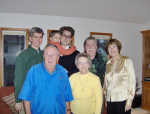
McCOOK, Nebraska -- The son of a 1952 McCook High School graduate has written a book about the mysteries surrounding his father's death. The book, "After Visiting Friends," is published by Simon and Schuster and was released on Feb. 19.
Michael Hainey was only 6 years old when his father, McCook native Bob Hainey, died unexpectedly on April 24, 1970.
After graduating from McCook High School in 1952, Bob Hainey attended the Medill School of Journalism at Northwestern University. He earned a master's degree in journalism in 1957.
In need of newspaper experience and upon the advice of his older brother, Dick, who was the chief of the local copy desk at the Chicago Tribune, Bob returned to McCook after graduation to work for the McCook Daily Gazette. At the time, the Gazette was in need of a managing editor for their Diamond Jubilee edition. The 80-page edition was published on June 3, 1957.
After publishing the edition, Bob went to Chicago, where his brother had gotten him a job as a copy editor on the Neighborhood News desk at the Chicago Tribune. There, he met his future wife, Barbara Hudak. They marry in 1961, and Bob quit the Tribune to take a position as copy editor at the Sun-Times in 1962. At the time of his death, Bob was assistant copy desk chief working the night slot at the Sun-Times. Bob died at the age of 35 of a cerebral hemorrhage.
The 6-year-old Michael Hainey dealt with the death of his father as any child would. But the adult version of Michael Hainey, a journalist himself, could not put to rest the inconsistencies found in various versions of his father's obituary printed in competing Chicago newspapers.
The book is about a son's quest to find out about his father's death. In the process of investigating his father's death, Michael learns a lot about his father's life. It is about the consequences of avoiding the truth and keeping secrets; and the consequences of revealing them. It is a love story, a memoir, a tragedy, a history, and a mystery.
One of the major characters in the book is the City of Chicago. Hainey writes about the many drinking establishments that newsmen liked to patronize in the late '60s. Radio Grill. Talbott's. Riccardo's. Billy Goat. Andy's. He also writes extensively about McCook. The Bieroc. Coppermill. Chief. Red Horse. Early in the book, he reveals the mystery behind vandalized earth-moving equipment in Red Willow County.
Hainey made several trips to McCook in the process of investigating his father's death. He initially describes McCook in less than flattering terms: "There's still no good reason for a man to live on this parched stretch of the American plains, where Kansas, Colorado, and Nebraska all huddle against one another," he writes.
He attended a class reunion held during Heritage Days as the guest of his father's best childhood friend, Kay Flaska. Michael describes Kay, "When Kay smiles, she smiles with her eyes. Her eyes are big and green and bright and they are never not sparkling. Beautiful. But looking at those eyes, I sense her longing. Loneliness? Her vulnerability? Or is that just me, projecting? Sitting here, though, listening to her, looking at her-I can see why my father wanted her to be his best friend. There's a calmness about her."
A major theme in the book is the answer to "What If?" What if his father had not died at such a young age? What if his father had died ten minutes earlier or ten minutes later than he did? What if Michael Hainey had questioned the circumstances surrounding his father's death earlier, before many of the characters had passed on?
Hainey's brother, Chris, answered that question in the book. "You can scream all you want about what happened in the past, but nothing's going to change. The past gives you no justice. Sentences are passed. But that doesn't mean you get justice."
The book is available at Accents, Etc. or online.